
An ATV guide in Bali does more than point at a muddy track and shout, “Follow me!” A good guide helps the ride run smoothly, explains how to handle the vehicle, watches the group, chooses a sensible pace and helps riders understand what is happening along the route. In other words, the guide is part instructor, part trail leader and part calm voice when your brain briefly forgets which lever does what.
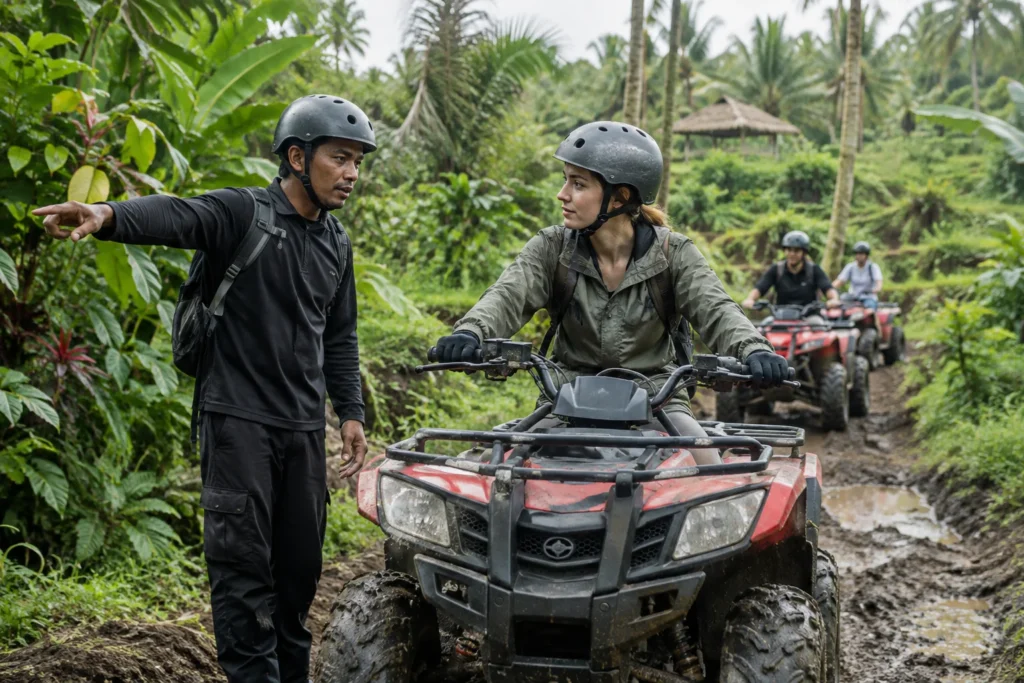
If you are planning a Bali ATV ride, knowing what the guide actually does can make the experience less mysterious, especially if it is your first time on a quad bike. Here is what to expect before, during and after the ride, plus a few useful questions to ask before booking.
Why an ATV guide matters on a Bali tour
An ATV tour is not simply a case of collecting a helmet and disappearing into the jungle. Routes can include narrow paths, uneven ground, wet sections, slopes, bends and places where riders need to slow down. The guide helps the group move through these sections in an organised way.
That does not mean a guide can make every track risk-free. Riding still requires attention, sensible speed and cooperation from each participant. The guide provides instructions and supervision, but each rider remains responsible for following them and controlling the vehicle within their ability.
Think of the guide as the person who knows the route and the rhythm of the tour. You bring the enthusiasm; they help turn it into an adventure rather than an unplanned meeting with a banana tree.
1. Welcoming riders and checking the group
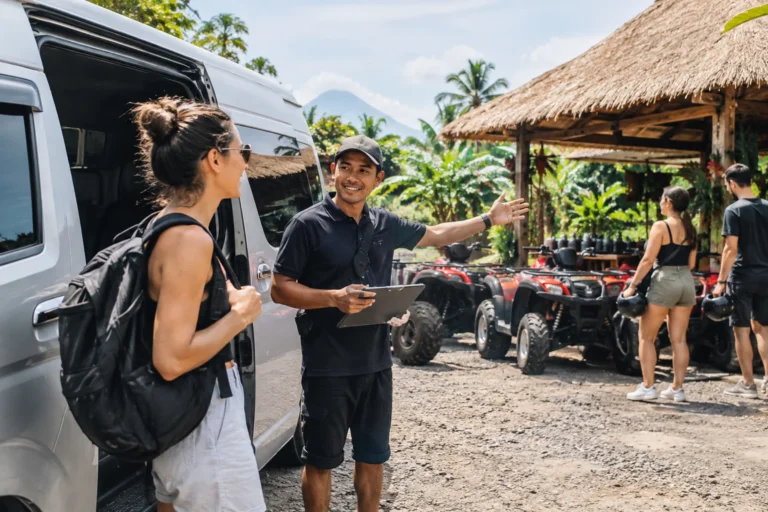
Before the engines start, guides or tour staff usually help organise arrivals, confirm bookings and identify who is riding a single ATV and who is sharing a tandem vehicle. They may also check basic participant details and explain where to leave personal belongings.
This first stage matters because a group may contain different experience levels. One guest might have ridden quad bikes several times, while another is still deciding whether the accelerator looks friendlier than it sounds. A guide needs to understand the group before leading it onto the track.
What you should tell the team
- Whether you have ridden an ATV before.
- Whether you are booked on a single or tandem ATV.
- If you are unsure about any part of the controls or instructions.
- If you have a concern that could affect your ability to ride safely.
Be honest. There is no prize for pretending to be an experienced racer. The aim is to enjoy the route at a pace that suits your actual ability.
2. Explaining the controls before departure
One of the guide’s most useful jobs is making sure riders understand the basic controls before moving off. The exact layout can vary between ATV models, so do not assume that every quad bike works exactly like one you used somewhere else.
Your guide should explain the relevant controls on the vehicle you will use, including how to accelerate, brake and stop. They should also show you the correct riding position and explain what to do if you are uncertain or need assistance.
Do not leave the briefing with unanswered questions
If you are not sure how to stop, ask again. If you cannot remember the instruction for slowing down, ask again. It is much better to spend an extra minute beside the vehicle than to try to solve a control puzzle while moving over uneven ground.
Guides may demonstrate the controls and allow riders to practise in a designated area before the main route. Use that opportunity. A short practice is not wasted adventure time; it is how you become more comfortable before the scenery starts moving past you.
3. Giving a safety briefing and setting ground rules
A proper briefing should cover more than “stay behind me”. Riders need to understand the basic rules for spacing, speed, overtaking, stopping and responding to instructions. The guide should also explain how the group will communicate if someone has a problem.
Common instructions include keeping a safe distance from the ATV in front, not attempting to overtake unless specifically permitted, slowing down when directed and stopping in a safe place if the vehicle behaves unexpectedly. The guide may also explain hand signals or other ways to communicate where engine noise makes conversation difficult.
Safety equipment is part of the process
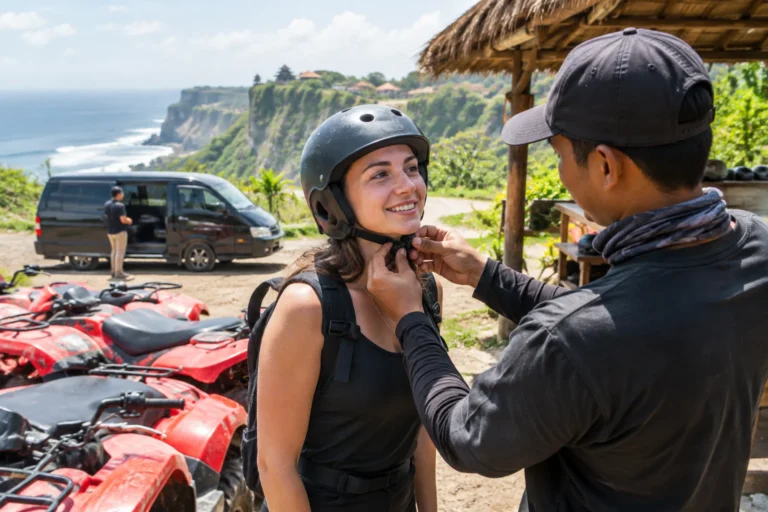
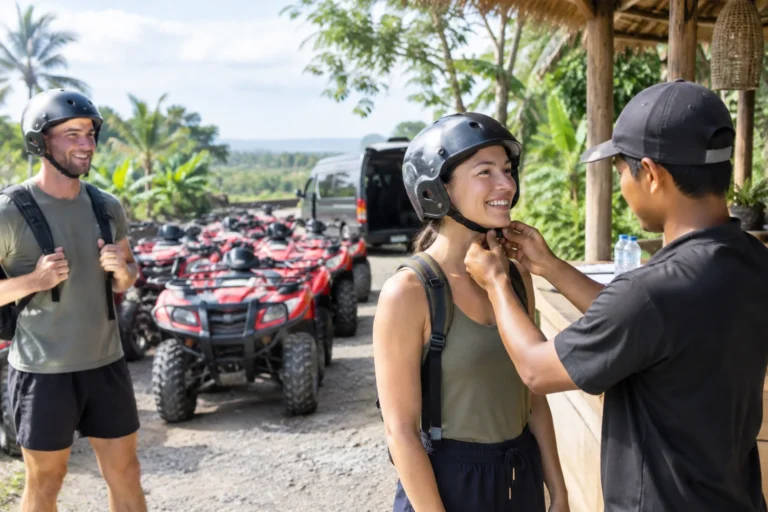
Helmets and other protective equipment should be provided or specified by the operator. Ask for help adjusting a helmet so it fits securely. Loose equipment is not something to ignore because the photo looks better without it.
For general off-highway vehicle safety education, the ATV Safety Institute offers guidance about responsible riding and protective practices. Its material is useful background reading, although your local tour operator’s briefing and the rules for the specific vehicle and track should guide your activity in Bali.
4. Leading the group along the route
Once the ride begins, the guide usually leads the group or positions staff at key points along the route. Their job is to help riders follow the intended path, understand changes in terrain and keep the group moving in a controlled order.
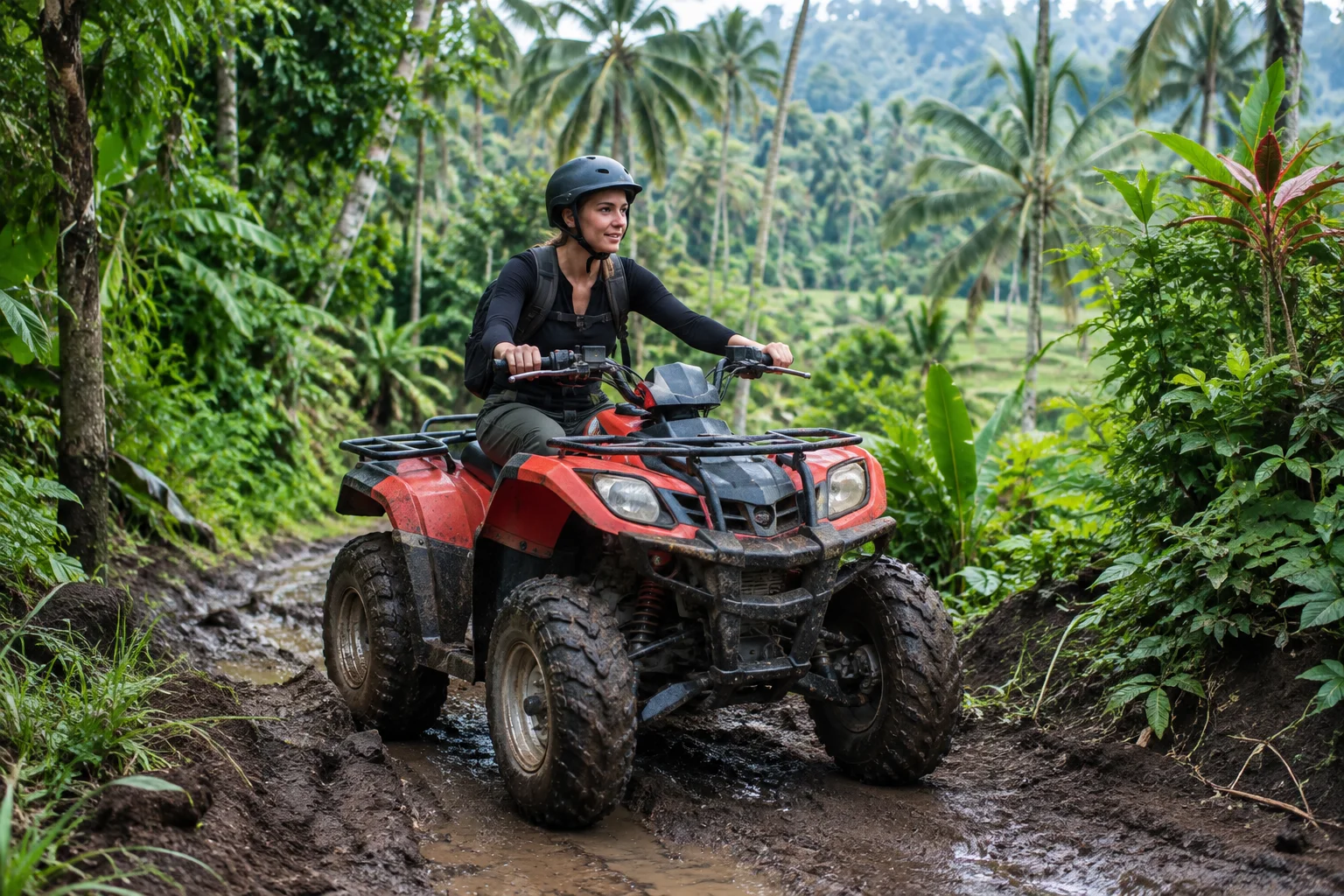
On a Bali ATV route, the surface may change from compact earth to loose soil, gravel, mud or shallow water. Some tracks include inclines, descents, bends, forest sections, tunnels or other purpose-built features. The guide can point out where riders should reduce speed, maintain space or follow a particular line.
Do not treat the person in front as a target to catch. The purpose is not to finish first. If the guide increases the gap, follow the instruction rather than trying to close it. A tour is an experience, not a championship with a suspiciously muddy trophy.
5. Adjusting the pace to the group
Not every rider moves at the same speed, and a responsible guide should take the group’s ability into account. Beginners may need more time to become comfortable with steering and braking. More experienced riders may feel ready to move faster, but they still need to follow the operator’s rules and the guide’s directions.
On some tours, the group travels together at a controlled pace. Other operators may organise riders into groups according to experience or vehicle type. The format depends on the provider, route conditions and number of participants, so it is worth asking before booking if this matters to you.
What if you feel nervous?
Tell the guide before the ride or at the first safe opportunity. You can ask for a slower pace, clarification or help. Do not wait until you feel overwhelmed. A guide cannot respond to a concern they do not know about.
If you are riding tandem, the guide should also explain how the passenger should sit, hold on and follow the driver’s movements. The passenger is not luggage with sunglasses; they are part of the ride and need to listen to the briefing too.
Reading the trail: how guides help riders approach different terrain
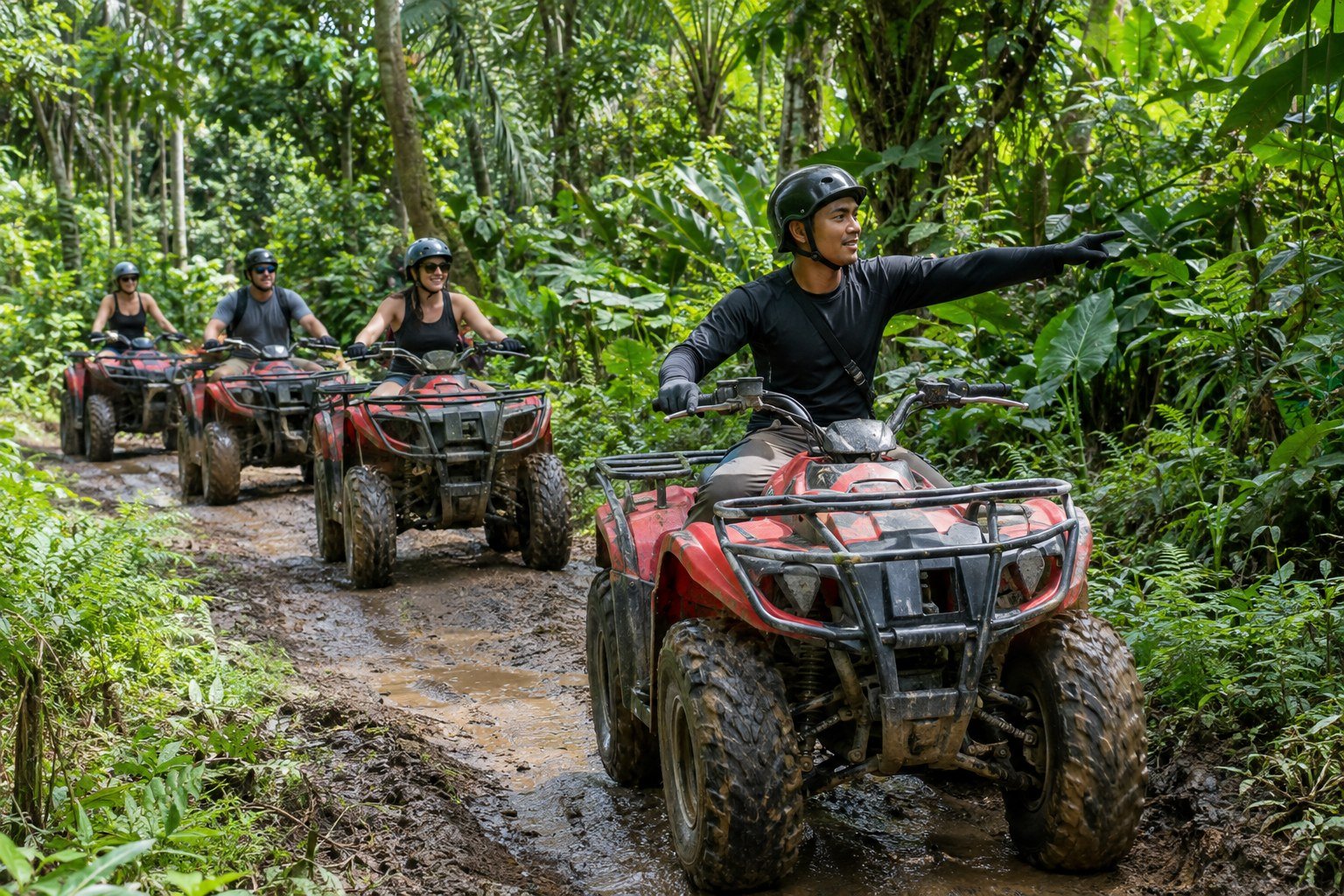
One reason a guide stays at the front or at a designated point on the route is that the ground can change quickly. A section that looks simple from a distance may have loose stones, a rut, a slippery patch or a tighter turn once you get closer. The guide can alert riders before they reach that section and explain whether to slow down, keep a steady line or wait for the rider ahead to clear it.
Listen for specific instructions rather than trying to copy another guest automatically. Different ATV models, rider confidence and track conditions can make the same obstacle feel different from one person to the next. If the guide demonstrates a line through a bend or asks everyone to leave extra space, follow that direction instead of inventing your own shortcut.
It is also normal for the guide to pause the group before a narrow or more technical section. These pauses are not necessarily delays; they give the team a chance to keep the route orderly and make sure riders are ready. If you are uncertain, use the pause to ask a clear question.
How guides communicate when the engines are loud
ATV engines, helmets and the outdoor environment can make ordinary conversation difficult. For that reason, guides may use simple hand signals, gestures, verbal calls at stops or a pre-agreed way to get the group’s attention. The system can differ between operators, so pay attention during the briefing and ask the guide to repeat any signal you do not recognise.
Do not assume that a wave or a movement means the same thing at every tour. Learn the signals used by your own guide. If you need to communicate, use the method explained by the team and avoid taking one hand off the controls while the ATV is moving unless the guide has specifically instructed you to do so.
For tandem riders, communication matters between driver and passenger too. Agree that the passenger will stay seated properly, hold the designated handholds and avoid sudden shifts in weight. A passenger who spots a photo opportunity should wait until the guide has brought the group to a safe stopping place. The jungle will still be there in thirty seconds.
6. Watching for problems and helping when someone stops
During a tour, a rider may need to stop because they are unsure about a section, the vehicle is not responding as expected or they simply need assistance. The guide helps coordinate the response and may ask the rest of the group to wait in a safe location.
If your ATV stalls or you feel you have lost control, do not panic or make sudden movements. Follow the instructions you were given, stop in a safe place if possible and signal the guide. Do not attempt a repair or restart procedure unless the guide or operator has explained that it is safe to do so.
Guides may be able to assist with simple issues or contact the support team, depending on the operator’s procedures. The exact support arrangements vary, so ask how the company handles a mechanical problem or a rider who cannot continue.
7. Pointing out interesting parts of the Bali landscape
An ATV guide is not always a sightseeing guide in the traditional sense, but they may point out interesting features along the route. Depending on the location, you might pass tropical vegetation, village surroundings, rice-field edges, forest paths, streams or purpose-built obstacles.
Some routes are designed around particular features such as tunnels, water sections or open countryside. If you are interested in a specific kind of scenery, check the route description before booking rather than assuming every Bali ATV tour offers the same landscape.
For example, the Kuber ATV Ubud experience is presented around its jungle and cave-style track features. Other operators offer different route characters. The guide helps you navigate the selected track, but the operator’s published itinerary is the best place to confirm what is included.
8. Managing stops, photos and group timing
Some tours include designated rest or photo stops. The guide may tell the group where it is safe to pause and when it is time to continue. These stops help keep the activity organised and can give riders a moment to enjoy the surroundings.
Do not stop wherever you like just to capture a perfect shot. A narrow track or slope may not be a safe place to park. Ask the guide where photography is permitted, and follow the operator’s rules about phones, cameras and action-camera mounts while riding.
If you want photos or videos, check whether the operator provides a photographer or sells photo packages. That service is not automatically included in every ATV booking.
9. Helping the group finish and return equipment
At the end of the route, the guide normally directs riders back to the finishing area and helps the group park safely. Staff may collect helmets or other equipment, explain where changing or shower facilities are located if available, and direct guests to the next part of the package.
If your booking includes another activity, such as lunch or a transfer, confirm the sequence with the team. If you are combining an ATV ride with another Bali experience, leave enough time between activities rather than planning the day as if every stop will happen with Formula One precision.
Some travellers also combine an ATV experience with other Bali ATV package options. If you are considering a separate rafting activity, check its own meeting point, duration, transport and booking conditions directly with that provider; it is a different activity with its own safety briefing and guide team.
What an ATV guide cannot do for you
It is useful to understand the limits of the guide’s role. A guide can explain, demonstrate, lead and assist, but cannot control your vehicle for you throughout the ride. They cannot guarantee that the track will feel easy to every person, and they cannot remove every risk associated with operating a motorised vehicle outdoors.
- They cannot replace your attention. Keep your eyes on the route and listen to instructions.
- They cannot make unsafe riding safe. Excessive speed and ignoring directions remain dangerous.
- They cannot know what you are feeling automatically. Speak up if you are uncomfortable or confused.
- They cannot promise identical conditions every day. Weather, surface conditions and group size can change the experience.
Questions to ask before booking a Bali ATV tour
A few simple questions can help you understand the level of guidance provided. You do not need to interrogate the booking team like a detective in a helmet; just make sure the practical details are clear.
- Is a guide included throughout the ride?
- Is there a safety briefing and a practice session before departure?
- How are beginners accommodated?
- How many riders are usually in one group?
- Are single and tandem ATVs available?
- What protective equipment is supplied?
- What happens if a rider needs to stop or cannot continue?
- Are photo stops and facilities included, or do they cost extra?
Compare the answers as well as the price. A low headline price is not especially helpful if you do not understand what the package includes, where the meeting point is or how the tour is supervised.
How to be a good guest on a guided ATV ride
The best tours work as a partnership between the operator, guide and riders. You can make the experience smoother by arriving on time, wearing suitable clothing, listening during the briefing and being realistic about your experience.
Keep a sensible distance from the vehicle ahead. Avoid sudden manoeuvres. Do not race other participants or pressure a nervous friend to go faster. If the guide asks the group to stop, stop. And if you do not understand an instruction, ask before setting off.
It is also worth remembering that Bali’s outdoor tracks are working environments for local teams. Treat staff respectfully, follow the route rules and avoid damaging plants or leaving rubbish behind. A good adventure should leave you with photos and stories, not a cleanup job for someone else.
Ready to choose your Bali ATV experience?
A guide plays an important role from the first briefing to the final stop. They help explain the vehicle, organise the group, lead the route, manage the pace and respond when a rider needs assistance. Your part is to listen, ride within your ability and communicate clearly.
Explore the available routes on the Bali ATV homepage, compare the track style and package details, or check availability through the ATV booking page. Choose the experience that matches your comfort level, ask questions before confirming and let the guide take care of the route. You can concentrate on the jungle views, the fresh air and the very serious business of trying not to smile too widely in your helmet.
Frequently asked questions
Is a guide included in a Bali ATV tour?
Guided tours generally include staff to lead or supervise the ride, but the exact arrangement varies by operator. Confirm whether a guide accompanies the group for the full route and how large the group may be.
Will the guide teach me how to ride an ATV?
The pre-ride briefing should explain the vehicle’s basic controls and safety rules. Some operators also provide a practice area. Ask for clarification if you are unsure before entering the main track.
Can I ask the guide to slow down?
Yes. Tell the guide if you are uncomfortable or need a slower pace. Follow the operator’s instructions and never try to keep up by riding beyond your ability.
What should I do if my ATV stops during the tour?
Stay calm, follow the safety instructions, stop in a safe place if possible and signal the guide. Do not attempt an unfamiliar repair or manoeuvre without guidance.
Does the guide take photos during the ride?
Not necessarily. Photo services differ between operators and may be an optional extra. Ask whether a photographer or photo package is available before booking.