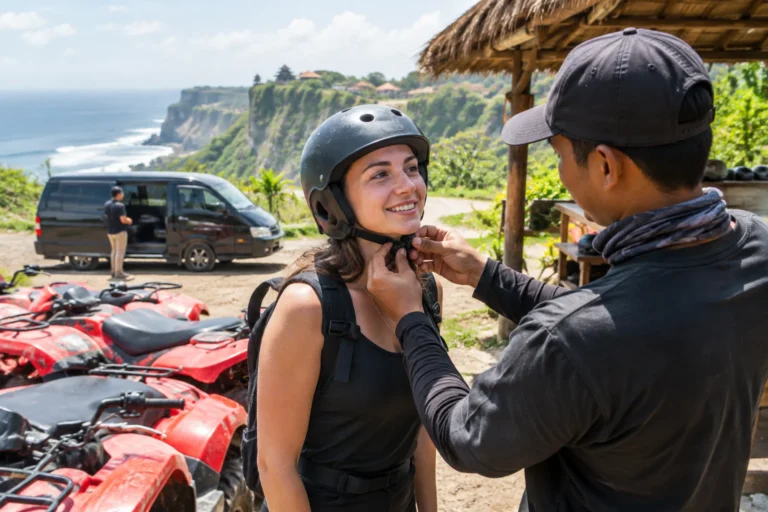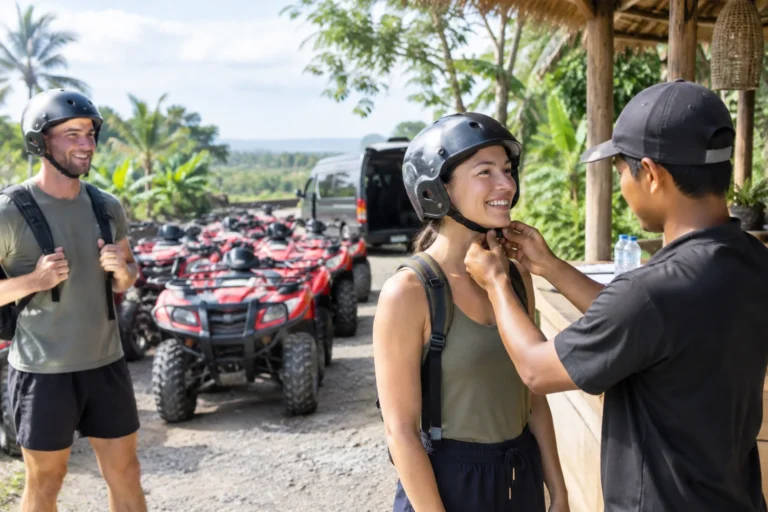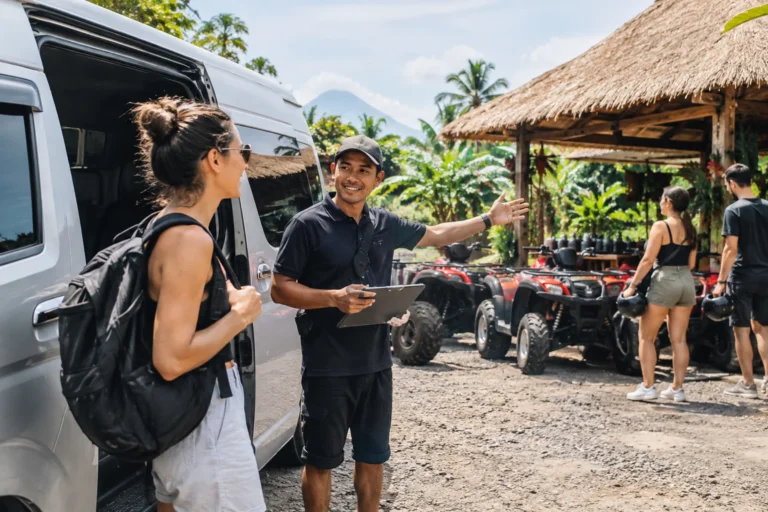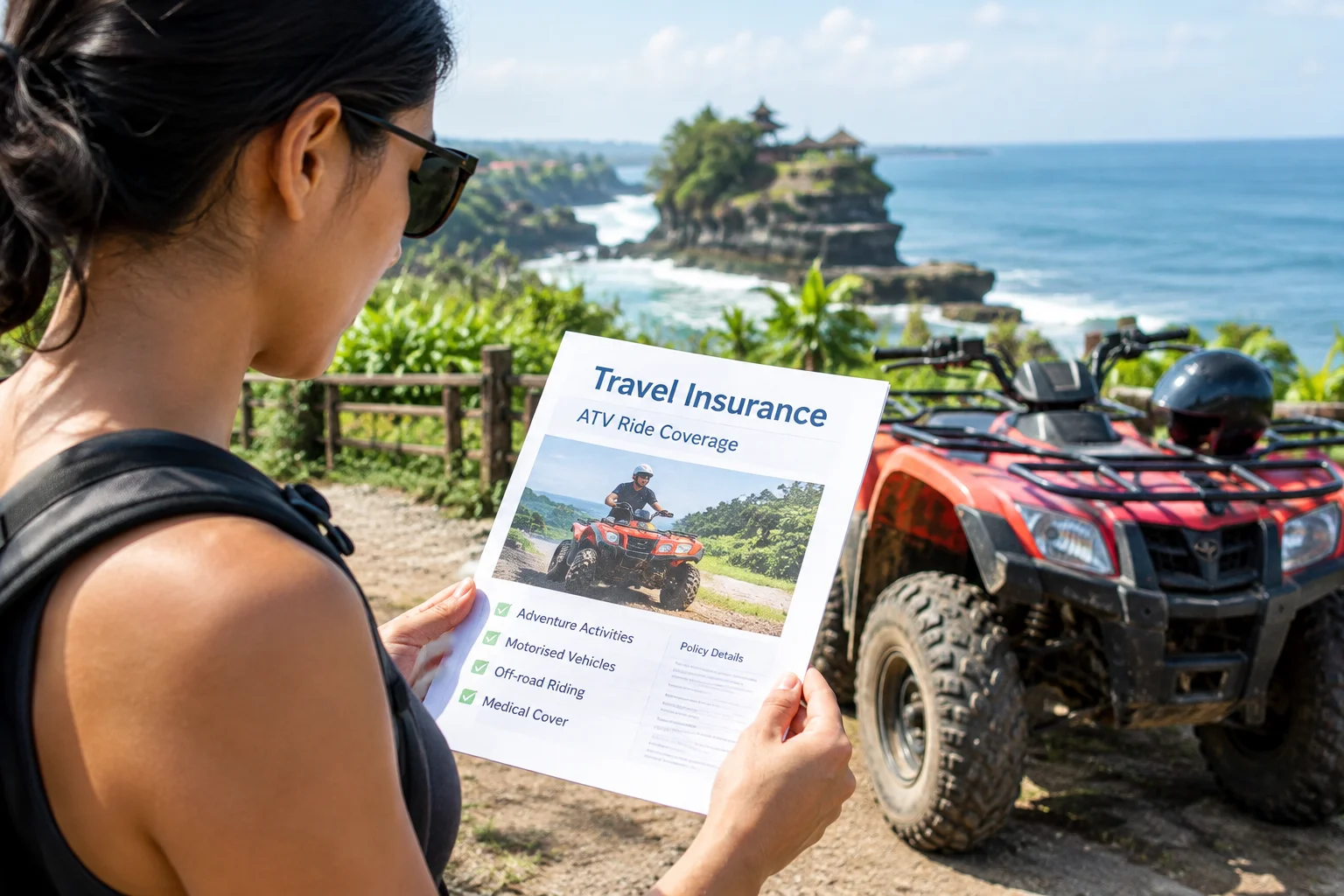

Booking an ATV adventure in Bali is usually the fun part. Reading an insurance policy is less exciting, but it can be one of the most useful things you do before the ride. A common assumption is that a standard travel insurance policy automatically covers every holiday activity. That is not always true, especially when a policy has separate rules for motorised activities, adventure sports, recreational vehicles or riding away from public roads.
If you are planning a Bali ATV ride, do not rely on a general statement such as “I have travel insurance”. Check whether your exact activity, role and circumstances are covered. This guide explains what to look for, what to ask your insurer and activity operator, and how to prepare without treating an insurance policy as a guarantee that every possible incident will be paid.
This is general travel-planning information, not insurance, legal or medical advice. Policy wording differs between providers and products. Your insurer’s current policy wording, certificate and written confirmation are the documents that matter for your own trip.
Does travel insurance automatically cover an ATV ride in Bali?
Not necessarily. Travel insurance is not one universal package. Different insurers define activities in different ways, and one policy may treat a guided recreational ATV tour differently from another policy. Some products include certain supervised tourist activities, while others list motorised vehicles, quad biking, off-road riding or adventure activities as exclusions unless an optional extension has been purchased.
Even where an activity appears to be covered, conditions may apply. A policy might require you to use a recognised operator, follow the guide’s instructions, wear protective equipment, avoid racing and meet the activity provider’s participation rules. A claim may also be assessed against the exact facts of the incident and the policy wording.
For example, Chubb’s published Indonesia travel insurance exclusions state that an insured person engaging in motor sports as a rider, driver or passenger is excluded, and also list extreme sports and sporting activities among the exclusions. The page does not itself decide whether every guided tourist ATV tour is classified as motor sport under every product, so ask the insurer how it classifies your exact activity. This example shows why you must read the wording for the policy you actually bought rather than assume that a guided tour is included.
Start with the official Chubb Travel Insurance explanation of what may not be covered, then check the wording and schedule for your own policy. Do not assume that another insurer uses the same definitions.
Why quad biking can be treated differently by insurers
An ATV is a motorised four-wheel vehicle designed for off-road or recreational use. From an insurer’s perspective, that can raise questions that do not arise with a normal sightseeing walk. The policy may classify the activity by the type of vehicle, whether it is on or off a public road, whether it is recreational or competitive, and whether the participant is the driver or a passenger.
Some insurers use the terms “quad bike”, “all-terrain vehicle”, “motorised recreational vehicle”, “motor sport” or “adventure activity”. Those terms may not mean exactly the same thing in every policy. A policy can also treat a guided tourist ride differently from racing, stunts or riding independently on public roads.
That is why searching a policy PDF for the word “ATV” is a useful first step, but it is not enough on its own. Search for related terms such as quad bike, motor vehicle, motor sport, off-road, recreational vehicle, adventure activity, competition and passenger. Then ask the insurer to explain any unclear wording in writing.
What to check in your travel insurance policy
1. Activity and vehicle definitions
Look for the policy’s definitions of adventure activities, extreme sports, motorised activities and recreational vehicles. Check whether quad biking or ATV riding is named specifically. If it is not named, do not conclude that it is automatically included. Ask the insurer how it classifies a guided recreational ATV tour in Bali.
2. Exclusions for off-road or motorised riding
Some policies contain exclusions for motor sports, racing, competitions, unlicensed vehicle use or particular types of off-road activity. The wording may distinguish a supervised tourist activity from a race or stunt, but the distinction is product-specific. Ask about the exact activity you intend to do, not just “adventure sports” in general.
3. Optional adventure or activity cover
Some travel insurance products offer an optional activity pack or higher level of cover. If you need an extension, confirm that it specifically includes recreational ATV or quad-bike riding in the way you plan to participate. Buying an add-on with a broad name does not prove that every motorised activity is included.
4. Driver versus passenger conditions
Check whether the policy treats the person operating the ATV differently from a passenger. If two people are sharing a tandem vehicle, both should understand whether the policy covers the driver, the passenger or both. Do not assume that a passenger is automatically covered because the driver is.
5. Supervision and operator requirements
A policy may require an activity to be provided by a recognised operator or conducted under the supervision of a qualified guide or instructor. Confirm what the insurer means by those terms. Also ask whether the operator must hold a particular licence or approval, if the policy specifies one.
6. Protective equipment and safety rules
Look for requirements relating to helmets, protective clothing, footwear and compliance with the operator’s safety briefing. If the policy requires protective equipment, follow the condition exactly. Ask the activity provider what equipment is supplied and whether anything else is required.
7. Medical expenses and emergency assistance
Check the policy’s medical expense limit, emergency assistance process, evacuation provisions and any excess you would have to pay. Read the rules for contacting the assistance team after an incident. Some policies require the insurer or assistance provider to be contacted before certain expenses are incurred, where reasonably possible.
8. Personal accident and liability cover
Medical expense cover, personal accident benefits and personal liability are different sections of a policy. One may apply while another does not. Check whether damage to another person’s property, injury to another person or damage to a hired vehicle is excluded or subject to a separate limit. Never assume that a travel policy will pay for damage to the ATV you are using.
Questions to send your insurer before the ride
A short, specific message is more useful than asking, “Am I covered for activities in Bali?” Give the insurer enough detail to identify the exact activity. You can adapt this checklist:
- Does my policy cover a guided recreational ATV or quad-bike tour in Bali?
- Does the cover apply when the vehicle is used on an off-road activity track?
- Am I covered if I operate the ATV, and is a passenger covered under the same terms?
- Do I need an adventure-sports or motorised-activity add-on?
- Are there restrictions on the operator, guide supervision or protective equipment?
- Are medical expenses, emergency transport and evacuation included for an incident during the ride?
- Are personal liability or damage to the ATV excluded?
- Are there age, health, alcohol or other conditions that could affect cover?
Ask for a written answer and keep it with your policy documents. If the insurer cannot confirm the activity, do not treat silence as approval. You may need to choose a different policy or decide not to take part.
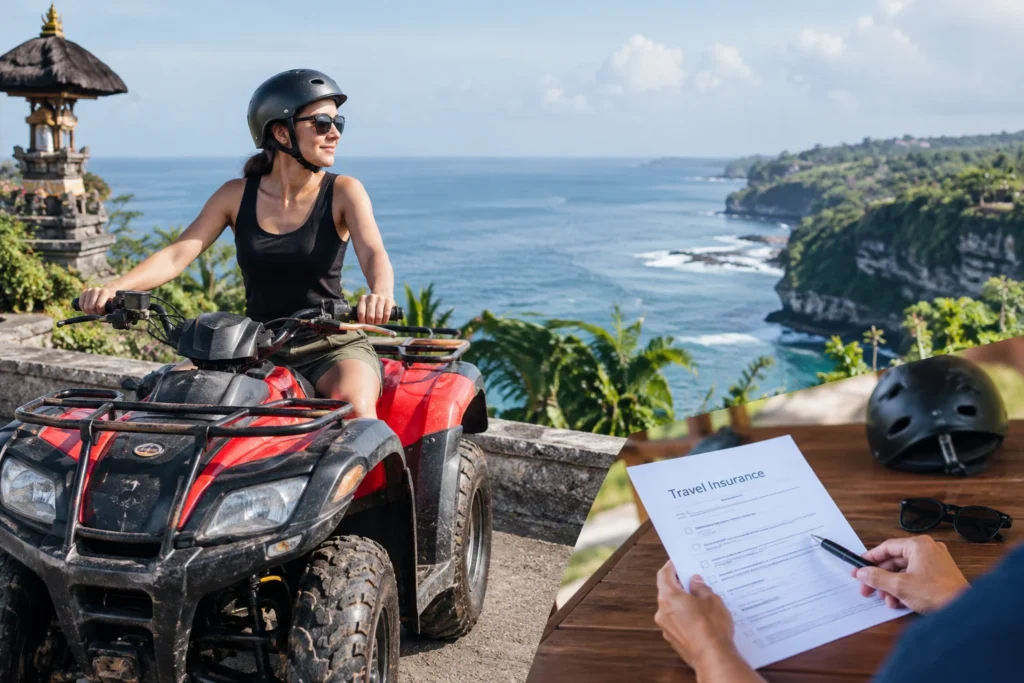
What should you confirm with the ATV operator?
The insurer answers questions about insurance. The activity operator answers questions about the actual ride. You need both sets of information to match.
Ask what kind of ride is being provided
Confirm whether the package is a guided recreational tour on a designated track, whether the vehicle is single or tandem, and whether the route includes any special sections. Do not describe the activity to your insurer as a simple sightseeing trip if the package involves a different kind of riding.
Check the safety briefing and equipment
Ask what protective equipment is supplied, what clothing and footwear are recommended, and whether there is a practice or familiarisation stage. Listen to the briefing and follow the guide’s instructions throughout the ride. If you do not understand a control or instruction, ask before setting off.
Understand the participation requirements
Ask about minimum age, passenger rules, health restrictions and any weight or height limits that apply to the selected operator. Requirements can differ between venues and packages. Tell the operator if you have a concern that could affect your ability to ride safely.
Read the booking and cancellation terms
Check what happens if weather, track conditions or an operational issue changes the activity. Ask whether a reschedule, refund or alternative is available and what notice is required. A travel insurance policy may not reimburse a change of plan simply because you no longer want to participate.
Insurance does not replace safe riding
Insurance is a financial protection arrangement subject to conditions. It is not permission to ignore instructions or take risks. The most useful preparation is still to choose an activity that suits your ability, listen carefully and ride within the guide’s directions.
Do not race other guests, attempt jumps or stunts, overtake where prohibited or leave the designated route. Do not operate the vehicle after consuming alcohol or any substance that could affect judgement or coordination. If you feel unwell, dizzy, unusually tired or uncomfortable, tell the staff before the ride begins.
For first-time riders, the guide’s briefing is particularly important. Read our first-time ATV ride in Bali guide and the article on what first-time riders should know about ATV safety. These guides help explain the preparation side of the activity; always follow the instructions for your actual venue.
What if you are injured during an ATV ride?
Follow the operator’s emergency procedure and seek appropriate medical attention. Tell the guide or venue staff what happened, and do not continue riding if you may be injured. If the situation is urgent, use local emergency services or the nearest appropriate medical facility rather than delaying care to complete paperwork.
When it is safe to do so, contact your insurer’s emergency assistance number and follow its instructions. Keep copies of medical reports, receipts, prescriptions, incident details and any other documents requested by the insurer. If the insurer needs an incident report from the operator, ask how to obtain it.
Be accurate when describing what happened. Do not guess about the cause or change details to fit what you think the policy requires. The insurer will assess the claim under the policy terms and the evidence available.
Travel insurance and damage to the ATV are not the same thing
One point that can easily be missed is the difference between your own injury and damage to the vehicle. A travel insurance policy may provide certain medical benefits but exclude damage to a hired, rented or borrowed vehicle. The ATV operator may have separate booking terms relating to damage, negligence, deposits or excess charges.
Before riding, ask the operator whether there is a damage liability, deposit or excess, and what circumstances could make a guest responsible for a charge. Request the conditions in writing. If a term is unclear, ask for an explanation before the activity starts.
Do not assume that a waiver means the operator accepts every possible cost, or that your travel insurer will reimburse a damage charge. These are separate contractual questions and should be checked separately.
Examples of why policy wording matters
Imagine two travellers who book what looks like the same ATV activity. One policy specifically includes guided recreational quad biking when the participant follows the operator’s rules. The other policy excludes motorised off-road activities unless an extension has been purchased. Their booking confirmation may be identical, but their insurance position could be very different.
Or consider a tandem booking. The driver checks the policy and receives confirmation, but the passenger never checks whether their own cover applies. That is an avoidable gap. Each traveller should check their own policy rather than relying on another person’s confirmation.
These examples are illustrative, not predictions about how a claim will be decided. Only the insurer can confirm how its wording applies to your circumstances.
A simple pre-ride insurance checklist
- Read the current policy wording and certificate, not only the sales summary.
- Search for ATV, quad bike, motorised vehicle, off-road, adventure activity and motor sport.
- Confirm cover for the exact guided recreational activity in Bali.
- Check driver and passenger conditions separately.
- Confirm whether an optional extension is required and purchase it before the activity if appropriate.
- Check medical expenses, emergency assistance, evacuation, liability and vehicle-damage exclusions.
- Save written confirmation from the insurer and the emergency contact number.
- Confirm the operator’s safety briefing, equipment and participation rules.
- Follow the guide’s instructions and do not race or perform stunts.
Frequently asked questions
Is a Bali ATV ride covered by normal travel insurance?
It depends on the insurer and policy. Some products may cover certain guided recreational activities, while others exclude quad biking, off-road motorised activities or adventure sports unless an extension applies. Check the current policy wording and obtain written confirmation.
Do I need special adventure sports insurance for an ATV ride?
Possibly. Some policies offer optional activity or adventure cover, but the name of the add-on does not guarantee that ATV riding is included. Ask the insurer specifically about a guided recreational quad-bike tour in Bali.
Am I covered if I ride as a tandem passenger?
Do not assume so. Check whether the policy covers passengers as well as drivers and whether any conditions apply to the vehicle or operator. Each traveller should confirm their own cover.
Does travel insurance pay for damage to the ATV?
Not necessarily. Vehicle damage, hired equipment and personal medical expenses are different types of cover. Check both the insurer’s exclusions and the operator’s damage or excess terms.
Will insurance cover an accident if I ignore the guide?
Policy conditions may require compliance with safety rules and guide instructions. Ignoring them could affect a claim, depending on the wording and circumstances. Follow the briefing and ride responsibly.
What documents should I keep after an accident?
Keep medical reports, receipts, prescriptions, the operator’s incident report and any other evidence requested by your insurer. Contact the emergency assistance provider and follow its claims instructions.
Book your Bali ATV adventure with the right preparation
A little insurance checking before an ATV ride can prevent a lot of uncertainty later. Confirm the activity with your insurer, understand the operator’s conditions and choose a ride that fits your experience and comfort level. Keep the policy documents accessible and follow the safety briefing on the day.
Explore the experiences on the Bali Quad ATV Ride homepage, review general package costs in the Bali ATV ride price guide, and check available dates through the ATV booking page.