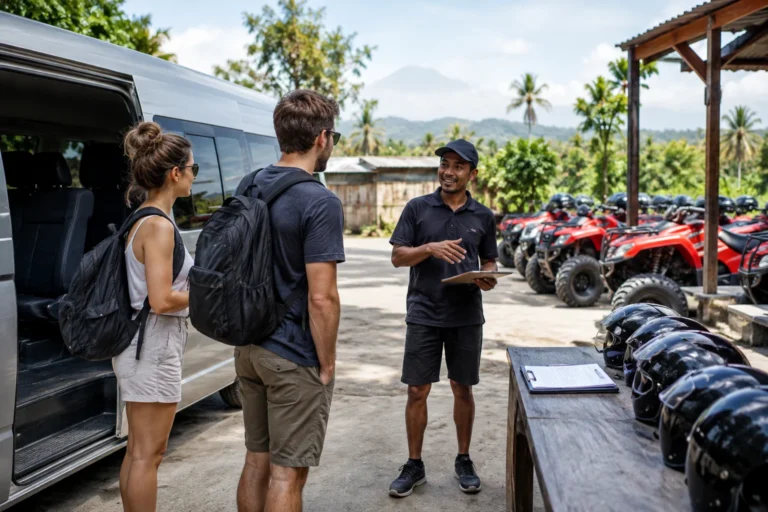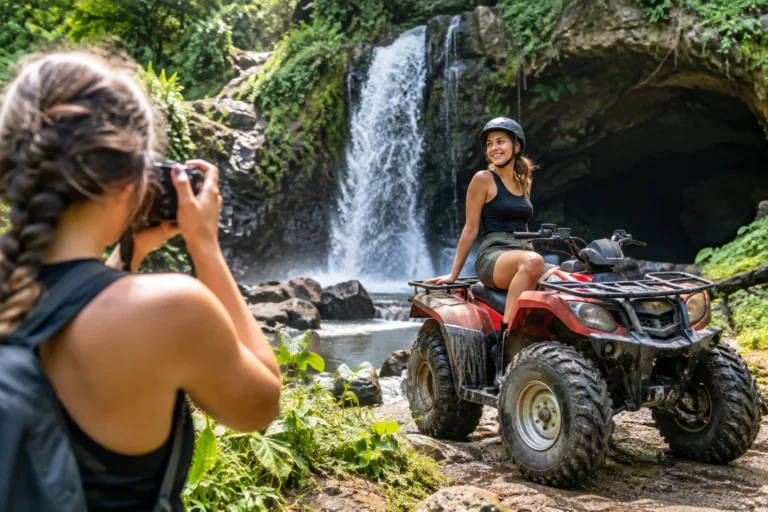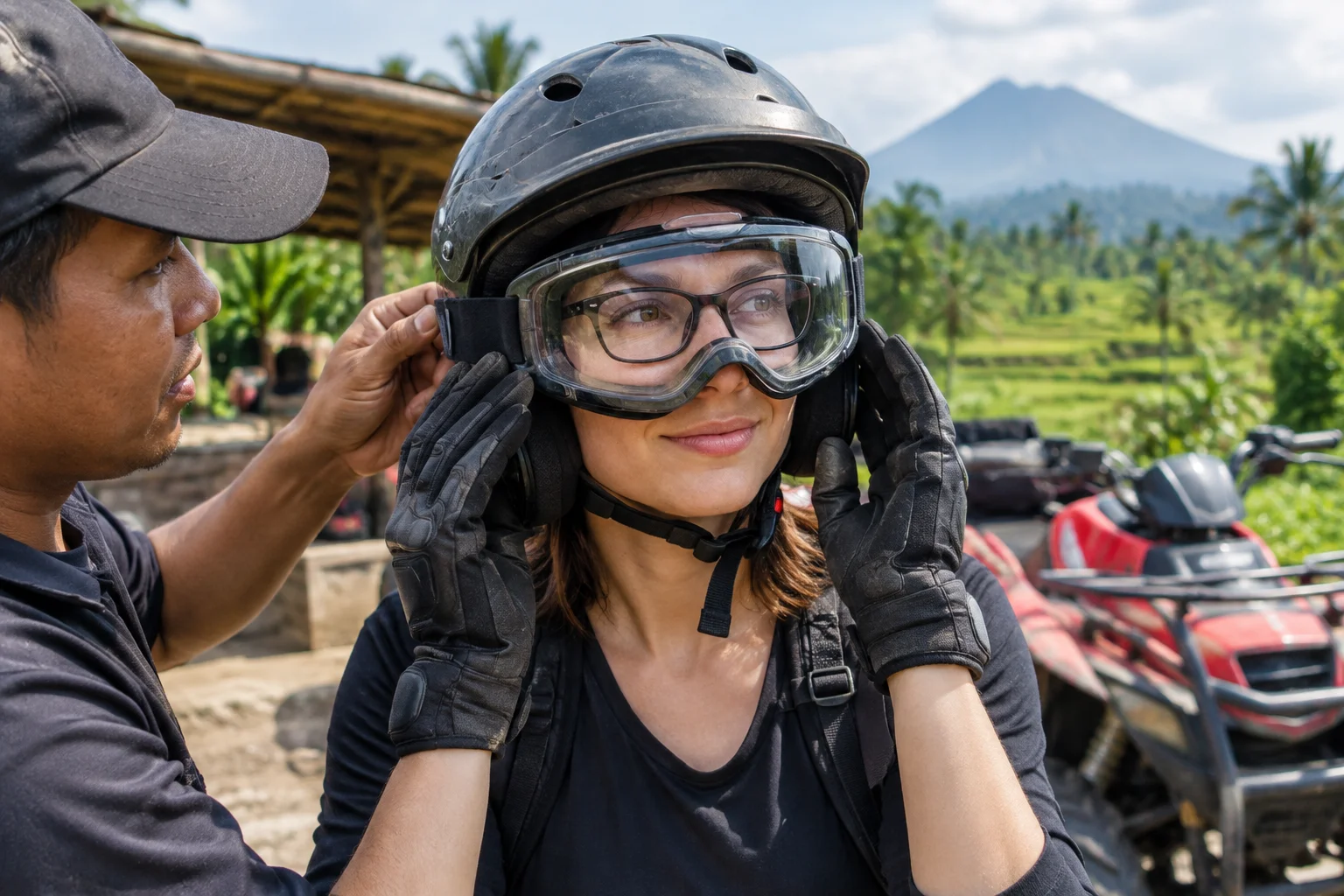

Wearing prescription glasses does not automatically rule out an ATV adventure in Bali. Many travellers rely on glasses every day, and taking them off is not a realistic option if doing so makes the trail, guide or other riders difficult to see. The practical challenge is finding a comfortable combination of prescription eyewear, a correctly fitted helmet and proper eye protection.
An off-road ride is different from a gentle walk through a rice terrace. Wind, dust, insects, low branches, splashes and changing light can all affect visibility. This guide explains what to check before a Bali ATV ride with glasses, how over-the-glasses goggles work, what contact-lens users should consider and which questions to ask an operator before booking. Equipment varies between venues, so confirm the arrangement for your actual tour rather than assuming every ATV base supplies the same gear.
Can you ride an ATV in Bali if you wear prescription glasses?
In many cases, yes. The key is whether you can wear your glasses comfortably with the helmet and suitable protective eyewear provided or approved by the operator. Some riders use goggles designed to fit over prescription frames. Others may use a compatible helmet face shield. Contact lenses are another option for people who already wear them comfortably, but they still need appropriate eye protection.
There is no universal combination that fits every face, glasses frame and helmet. A pair of large fashion frames may take up more room than compact prescription glasses. A helmet opening may also be shaped differently from the one you use for cycling or motorbike travel. That is why a quick fit check before the ride matters.
Your glasses should not be pushed painfully against your nose or temples. The helmet must still sit in its intended position and fasten securely. Goggles or a face shield should remain stable when you turn your head, without pressing the frames into your face or leaving a large gap around the edges. If the combination feels awkward while standing still, it is unlikely to feel better on a bumpy track.
Why ordinary glasses and sunglasses are not enough
Prescription glasses are designed primarily to correct vision. Ordinary sunglasses reduce brightness, but neither should automatically be treated as impact-rated ATV eye protection. A small stone, flying dirt, an insect or a branch can reach the face quickly. Wind can also make your eyes water and distract you when you need to concentrate on steering.
The ATV Safety Institute explains that riders need to see clearly and recommends suitable goggles or a face shield. Its guidance says ordinary sunglasses do not provide proper protection for ATV riding; protective eyewear should be secure, free of scratches and ventilated to help prevent fogging. Read its ATV Tips and Practice Guide for broader riding advice.
The US Consumer Product Safety Commission also advises ATV riders to use protective equipment including goggles, gloves, long trousers, long sleeves and appropriate boots. Its quick facts for a safer ride are useful general background, although the operator’s instructions and the requirements for the specific vehicle should always be followed.
Think of the two layers as doing different jobs: your prescription glasses help you see clearly, while properly selected protective eyewear helps shield your eyes from the riding environment. One does not automatically replace the other.
What are over-the-glasses (OTG) goggles?
OTG stands for “over the glasses.” These goggles are designed with extra internal space so that some prescription frames can fit underneath them. They can be a practical option for riders who want to keep their usual glasses on while adding a protective outer layer.
However, the label does not guarantee that a particular pair will fit your glasses or the helmet at the ATV venue. Frame width, lens height, thick temples and the shape of the helmet opening all affect the fit. Even goggles marketed as OTG may be uncomfortable with oversized frames.
Try the complete setup, not just the goggles
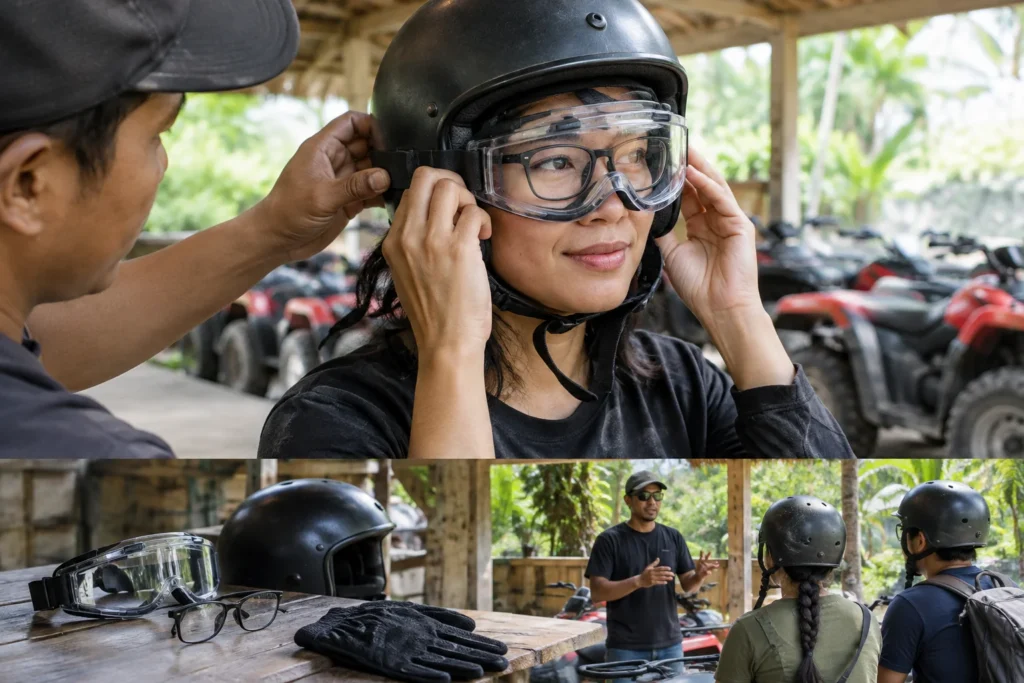
Ask staff to help you test the helmet, prescription glasses and protective goggles together. Put the helmet on first as directed, position your glasses naturally, then fit the goggles or face shield. The helmet should not be forced into a different position just to make room for the frames.
Turn your head gently from side to side and look up and down. Your glasses should stay in place, the goggles should not lift away from your face, and your view should remain clear. Check that the helmet strap can be fastened correctly and that nothing causes sharp pressure around your ears, nose or temples.
Check visibility around the edges
Do not focus only on whether you can see straight ahead. Check your side vision too. A bulky frame, poorly positioned goggle or scratched lens can make it harder to notice a guide’s signal or another vehicle nearby. If the fit blocks your view, ask whether another size or approved arrangement is available.
Never cut foam, bend helmet parts, remove protective components or modify goggles to accommodate your glasses. If the supplied equipment cannot fit securely, discuss another option with the operator before riding.
How to deal with fogging in Bali’s humid conditions
Fogging happens when moisture in the air collects on a cooler lens surface. Wearing prescription glasses beneath goggles can create another enclosed space where warm, humid air builds up. Bali’s tropical humidity, physical effort and a warm helmet may make the problem more noticeable, although the result depends on the equipment and weather.
Start with clean lenses
Clean your prescription glasses using the method recommended for their lens coating. Smudges and dust can make glare and poor visibility more distracting. Check the protective goggles or visor too. If the supplied eyewear is scratched, dirty or difficult to see through, ask staff to check or replace it before departure.
Use ventilation designed into the equipment
Choose goggles and helmets designed to work together and provide appropriate ventilation. Do not tape over vents or alter the equipment. Avoid applying household sprays, detergent or improvised anti-fog chemicals unless the manufacturer confirms that the product is suitable for that lens material and coating. Some treatments can damage optical surfaces.
Stop if your vision becomes unclear
If your glasses or goggles fog during the ride, do not continue moving while trying to wipe them. Signal the guide and stop where instructed. Adjust or clean the equipment only when the vehicle is safely stopped and the guide says it is okay. Clear vision is part of controlling the ATV, not a minor comfort issue.
What if you wear contact lenses instead?
Contact lenses can be convenient for some people because there are no spectacle frames beneath the helmet or goggles. They may also reduce the problem of glasses slipping during movement. But a Bali ATV tour is not the right place to experiment with a new lens type or a different wearing routine.
Follow the instructions from your eye-care professional and the contact-lens manufacturer. If you already wear contacts comfortably during outdoor activities, think ahead about what you will do if dust, wind or irritation makes them uncomfortable. Pack your current prescription glasses as a backup, along with the case and lens-care solution recommended for your lenses.
The US Centers for Disease Control and Prevention advises contact-lens users to wash and dry their hands before handling lenses, keep lenses away from water, use recommended solution and carry backup glasses when travelling. Its contact-lens infection prevention guidance includes practical travel tips.
Do not handle lenses with dusty or muddy hands
An ATV activity can leave your hands dirty. Avoid rubbing your eyes or removing a contact lens with muddy fingers. If you need to handle lenses, move to a clean place, wash your hands thoroughly with soap and clean water, and dry them with a clean towel. Keep lens supplies protected from dust and splashes.
Keep contact lenses away from water
Some ATV tracks include puddles, water splashes or wet sections. Contact lenses should not be exposed to water. The CDC explains that water can cause soft lenses to change shape, swell or stick to the eye, and that germs in water can cause serious eye infections. See its specific advice on keeping water away from contact lenses.
If the route is likely to involve substantial water exposure, ask your eye-care professional in advance whether wearing contacts is appropriate for you. Do not assume that a helmet visor makes contact lenses safe around water.
Know when to stop using your lenses
If you experience eye pain, unusual redness, blurred vision, discharge, significant irritation or light sensitivity, stop the activity and follow professional eye-care advice. The US Food and Drug Administration describes potential contact-lens risks and symptoms that should not be ignored in its contact lens risks guidance. This article is general travel information, not a diagnosis or personal medical recommendation.
Questions to ask the Bali ATV operator before booking
A short message before your activity can prevent an uncomfortable surprise at check-in. Explain that you wear prescription glasses or contact lenses and ask practical questions about the equipment. Do not wait until the group is ready to leave the base to mention a fit problem.
- Can the supplied helmet accommodate prescription glasses comfortably?
- Are OTG goggles available, or does the helmet have a suitable face shield?
- Can I try the helmet and eye protection together before the ride?
- Are different helmet or goggle sizes available?
- What should I do if my eyewear fogs or becomes dirty during the route?
- Does the route include water splashes, dusty sections or low branches?
- What happens if I cannot get a secure and comfortable fit?
- Is there a safe place to store my spare glasses and lens-care items?
Ask for clear answers rather than assuming “helmet included” means prescription glasses will fit beneath every helmet. Equipment may differ by venue, vehicle or day. Our guide to Bali ATV check-in, equipment and safety briefings explains other details worth confirming before the group sets off.
What to pack if you need prescription glasses
You do not need to bring your entire eyewear drawer. A few practical items can make the visit easier:
- Your usual prescription glasses: Bring the pair that sits securely and gives you clear vision. Avoid arriving with a loose or damaged frame if you have another suitable pair.
- A sturdy glasses case: Protect your spectacles while changing, showering or storing belongings. An open pocket is not a great storage plan on an off-road activity.
- A clean microfibre cloth: Use it when both your hands and the cloth are clean. Keep it in a small sealed pouch so it does not collect grit.
- Backup glasses: If you have a spare pair with a current prescription, pack it in a protective case in case your main pair is damaged or misplaced.
- Contact-lens supplies, if applicable: Bring the case and solution recommended for your lenses, plus backup glasses. Do not rely on finding your exact supplies near the ATV venue.
Keep loose items secured before riding. Ask whether the operator provides lockers and how to use them. Our guide on what to bring for an ATV ride in Bali covers other useful items for the day.
What to do during the ride
Once the guide gives the safety briefing, follow the route instructions and keep your attention on the trail. Look ahead rather than down at the front of the vehicle, maintain the distance requested by the guide and avoid sudden movements. Clear vision helps you notice changes in the surface, other riders and signals from staff.
Do not adjust your glasses while the ATV is moving. If a frame slips, a lens fogs or a speck gets into your eye, signal the guide and stop safely as directed. Do not remove your helmet or protective eyewear in a moving group. Wait until the vehicle is stopped and staff say it is safe to make an adjustment.
If you are new to riding, take the briefing seriously and ask the guide to explain any instruction you do not understand. Our first-time ATV ride in Bali guide explains the usual stages of a beginner-friendly activity.
Do not ride if your view is blurred, your protective eyewear will not stay in place or the helmet cannot be secured correctly. If the equipment is uncomfortable, ask for help before leaving the base. A scenic track is not worth compromising your ability to see clearly.
How to compare ATV routes when eye protection matters
Some routes are more exposed to dust, mud, vegetation or water than others. A beach-side track, a jungle trail and a route with river sections can create different conditions for eyewear. That does not mean one type is automatically safer or unsuitable; it means you should ask what the current route actually includes.
Compare the terrain description, the operator’s protective equipment, the availability of different helmet sizes and the guide’s procedure if visibility becomes poor. Do not choose solely from a promotional photo. Our overview of jungle, cave and beach ATV packages in Bali can help you understand how route styles differ.
Also check the actual riding time separately from the total time at the venue. Registration, equipment fitting, briefing, waiting, showering and changing can all add time to the visit. This is useful when planning transport or combining an ATV tour with another activity.
Frequently asked questions
Can I wear prescription glasses under an ATV helmet in Bali?
Often, but it depends on your frame, helmet and protective eyewear. Ask the operator before booking and test the complete combination at the venue. The helmet must remain correctly fitted and the glasses must not cause pain or move around.
Are regular sunglasses enough for an ATV ride?
No. Ordinary sunglasses should not be treated as a substitute for suitable protective goggles or a face shield. Follow the vehicle and operator requirements and use protective eyewear designed for riding conditions.
What does OTG mean on riding goggles?
OTG means “over the glasses.” These goggles have extra space intended to fit over prescription frames. Fit still depends on the shape and size of your glasses and helmet, so test the complete setup rather than relying on the label alone.
Can I wear contact lenses on an ATV tour?
Some people may choose to wear their usual contact lenses, but suitability depends on their own eye-care advice and the activity conditions. Follow professional guidance, keep lenses away from water, carry backup glasses and stop if irritation or vision changes occur.
What if my glasses fog up during the ride?
Signal the guide and stop safely as instructed. Do not try to wipe or adjust your glasses while moving. Ask staff to check the fit and ventilation of the protective equipment before continuing.
Should I bring a spare pair of glasses?
If you have a current backup pair, bringing it in a protective case is sensible. It can be useful if your main glasses are damaged, lost or become uncomfortable.
Will every Bali ATV operator provide goggles that fit over glasses?
No. Equipment and policies vary. Ask the operator directly whether OTG goggles or a suitable face shield are available and whether you can test the fit before the ride.
Can I ride if I have trouble seeing clearly with the supplied goggles?
No. Do not start or continue riding if your vision is unclear or the protective eyewear cannot be secured properly. Ask the operator for another suitable arrangement or postpone the activity.
Enjoy the adventure with clear vision and the right fit
Wearing glasses should not automatically stop you from exploring Bali’s off-road scenery, but it does mean planning your eye protection before the activity. Tell the operator what you wear, check the helmet and eyewear together, and do not compromise on a secure fit or clear vision. If you use contact lenses, follow your eye-care professional’s instructions and keep backup glasses and lens-care supplies handy.
When you are ready to compare options, visit Bali Quad ATV Ride or review the ATV booking page. Confirm the current route, equipment and activity details with the operator before finalising your booking. A little preparation at check-in makes it easier to focus on the adventure once the engines start.