
Some Bali days are made for slow temple visits and long lunches. Others are better spent swapping a steering wheel for a paddle and getting properly close to the island’s landscapes. Combining an off-road quad bike experience with Ayung River rafting can make a memorable full-day adventure, but it needs a little more planning than booking two activities at random.
The key is understanding how the two experiences fit together: where they take place, how long each part really takes, what to bring, how to manage transport, and which safety questions to ask before paying. This guide explains how to plan a Bali ATV and rafting combo sensibly, whether you book a combined package or arrange the activities separately.
Why Combine an ATV Ride and Ayung River Rafting?
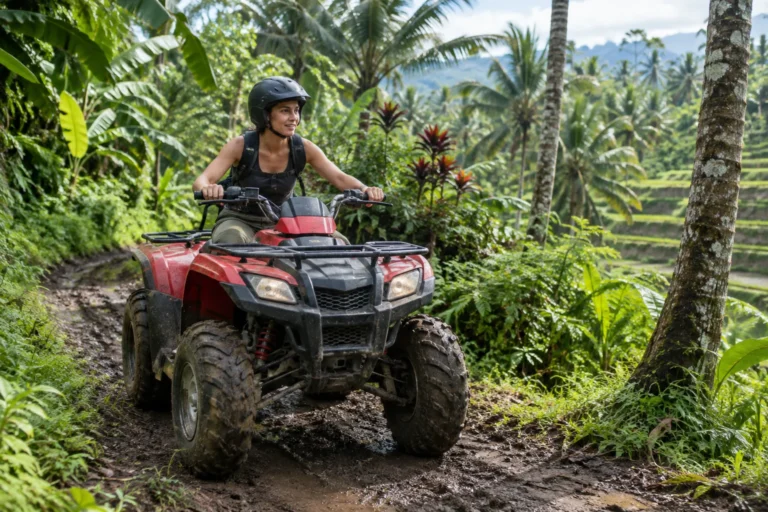
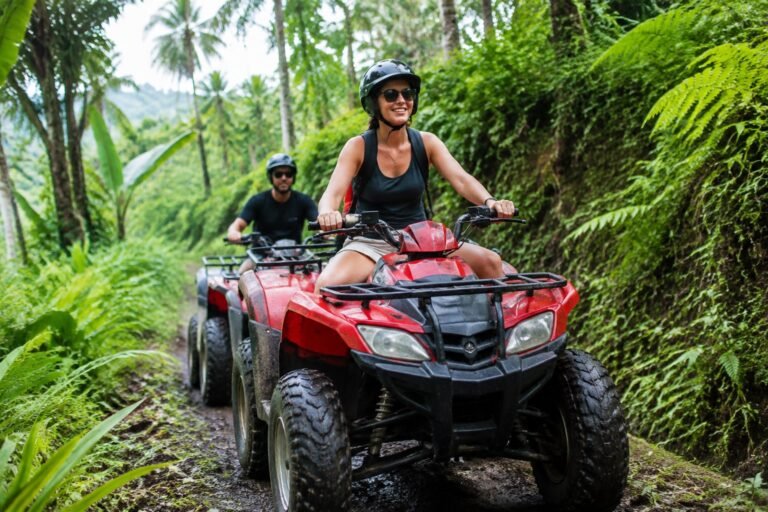
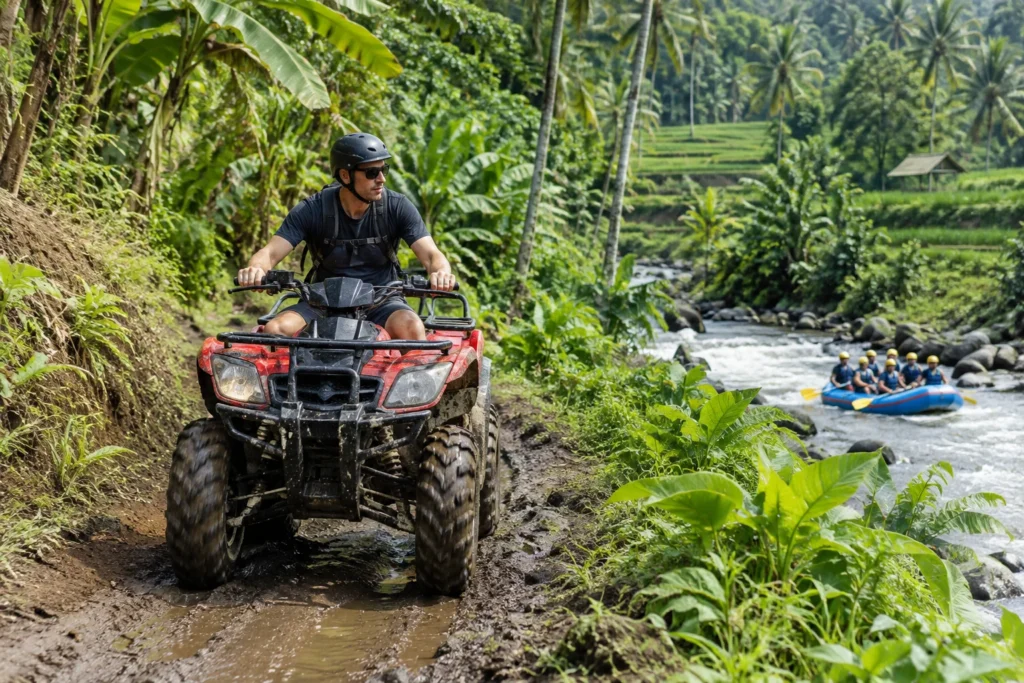
An ATV ride and a rafting trip offer two very different ways to explore Bali. On an ATV, you follow a guided route over changing terrain. Depending on the operator and track, that may mean compact dirt, muddy sections, village lanes, jungle edges, shallow water crossings or purpose-built obstacles. On the Ayung River, the pace changes: you travel by raft through a river valley, work with a team, listen to a rafting guide and enjoy the scenery from water level.
That contrast is the main attraction. One activity is about controlling a vehicle over uneven ground; the other is about cooperating with a crew and responding to the river. You get variety without needing to fill two separate days with similar experiences.
There is also a practical reason. Many ATV bases and rafting operators serve the wider Ubud area, so it may be possible to combine them in one itinerary. However, nearby on a map does not automatically mean next door. Access roads, meeting points, river entry and exit locations, and transfer arrangements all affect the actual schedule.
How Much Time Should You Set Aside?
Think in terms of a full day rather than the advertised activity duration. A listing might describe an ATV session of around one to two hours and a rafting session of roughly two hours, but those figures usually refer to the activity itself. They may not include check-in, equipment fitting, safety briefings, practice time, walking to the river, changing, lunch or transfers between locations.
If you are travelling from southern Bali, hotel pickup and return can add a substantial amount of time. Traffic can also vary, particularly around busy junctions and during holiday periods. For that reason, avoid placing a fixed airport transfer, a dinner reservation with a tight arrival time, or another prepaid activity immediately after the combo.
A realistic planning framework
- Morning: travel to the first activity, check in, complete the safety briefing and take part in the guided session.
- Midday: allow time to shower or change, eat if lunch is included, and travel to the second activity.
- Afternoon: complete the second briefing and guided session, then change and arrange the return journey.
- Evening: keep the schedule flexible. You may be tired, muddy, wet or simply ready for a relaxed meal.
The order is not universal. Some packages start with rafting and continue with ATV riding; others do the ATV first. The operator may change the sequence because of availability, weather, river conditions or logistics. Ask for the planned order and approximate finish time in writing rather than relying on a generic itinerary found online.
Should You Do the ATV Ride First or Rafting First?
There is no single best sequence for every traveller. The right order depends on the package, the meeting points, the weather and how the operator manages its departures.
Starting with an ATV ride
Doing the ATV activity first can be appealing if you prefer to tackle the driving portion while you are fresh. You can then clean up, change into dry clothes and continue to the river. The important detail is whether the package provides enough time between activities. Do not assume that a quick rinse means you will be ready to leave immediately; queues for showers, lockers and changing rooms can slow a busy departure.
Starting with Ayung River rafting
Rafting first can work well when the operator has a morning river departure and an afternoon ATV slot. You will get wet, so confirm where you can change and whether you can safely store your dry clothes. Ask whether lunch is served before or after the ATV session, and whether the transfer between activities is included.
Whichever order you choose, the best itinerary is the one with realistic transition time. A schedule that looks impressively packed on a booking page is not necessarily a comfortable day in real life.
What Is the Ayung River Rafting Experience Like?
The Ayung is one of Bali’s best-known rafting rivers and is often chosen by visitors staying around Ubud. The experience takes place in a tropical river valley, where the view changes from the raft: green slopes, overhanging vegetation, rock features and sections of moving water. The river’s character varies with rainfall and local conditions, so the feel of a trip can change from one day to another.
Rafting is a guided activity, not a free-for-all paddle down the river. Participants receive a briefing and are expected to follow the guide’s commands, remain seated as instructed and use the supplied safety equipment correctly. You may need to walk down steps or uneven paths to reach the river and climb back to the finish point. Ask about access if anyone in your group has mobility concerns.
Do not judge a rafting operator only by dramatic photos of rapids. Ask which river section is used, how long the on-water portion usually lasts, what equipment is supplied, what the minimum age and health restrictions are, and what happens if water levels or weather make the trip unsuitable.
What Kind of ATV Track Should You Choose?
Not all Bali ATV routes feel the same. Some focus on jungle scenery and muddy trails; others include rice-field edges, village surroundings, tunnels, water features or beach terrain. The most exciting-looking track is not automatically the best match for every rider.
Jungle and countryside routes
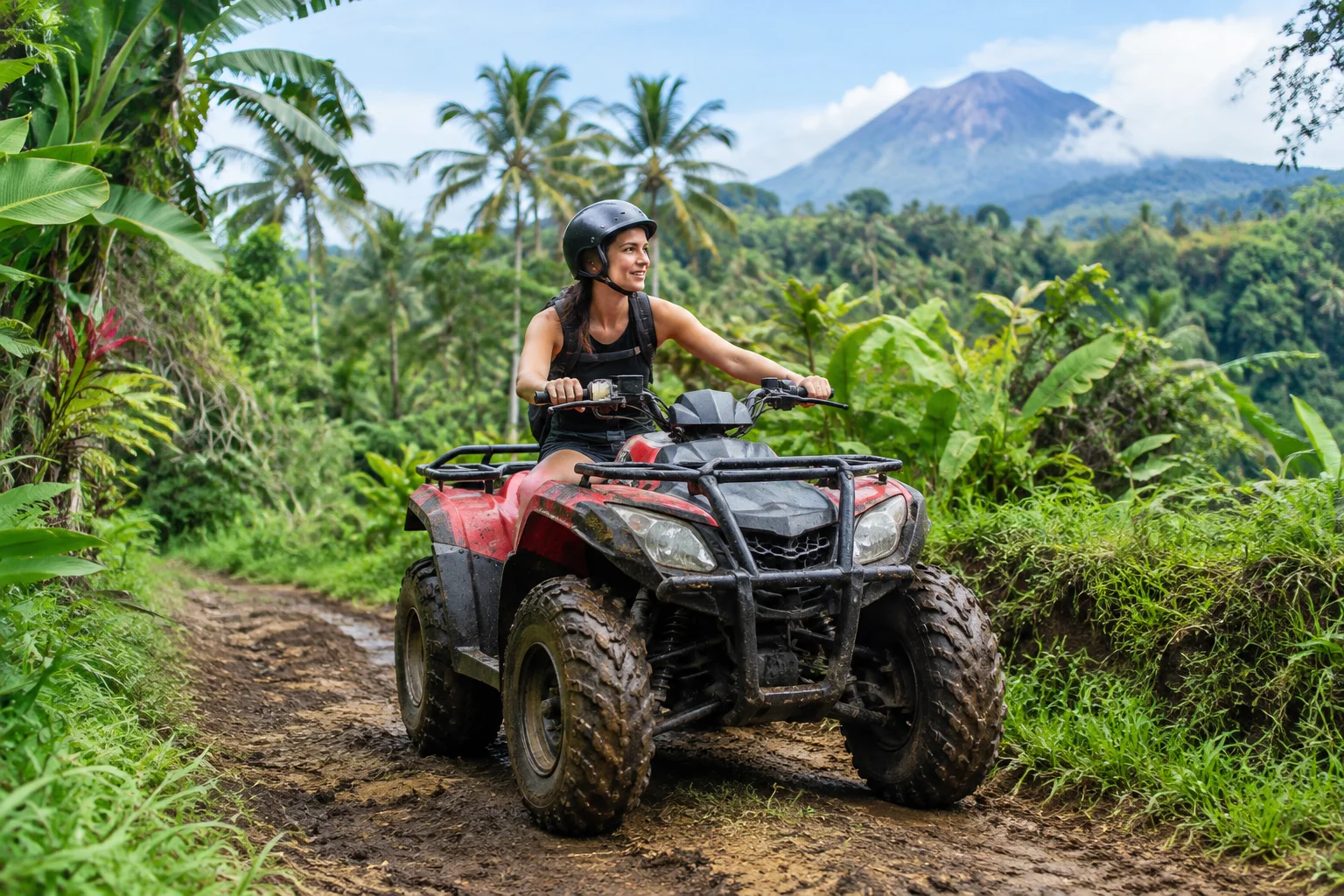
These are a natural choice if you want a green, inland setting. Expect changing surfaces and occasional uneven sections. Ask whether the route is mostly a natural trail, a managed adventure track or a mixture of both.
Cave, tunnel and waterfall features
Some Ubud-area experiences advertise distinctive features such as cave passages, tunnels or waterfall sections. Confirm that the feature is part of the current route on your selected date. Operators can alter tracks for maintenance, weather or safety reasons, so an old photograph is not a guarantee of what you will ride.
Beach and coastal routes
Coastal ATV experiences have a different atmosphere from inland jungle rides. If a beach route is your priority, check the exact location and whether the ride takes place on an approved route. Do not assume a package advertised as “Bali ATV” includes a beach simply because the island has a long coastline.
For more detail about route styles, see our guide to comparing jungle, cave and beach ATV packages in Bali, as well as our overview of where you can ride an ATV in Ubud.
Is a Combined ATV and Rafting Day Suitable for Beginners?
Beginners can often join guided ATV and rafting experiences, but “beginner-friendly” does not mean that every person can participate in every condition. Each activity has its own requirements, and the operator’s rules take priority.
For the ATV portion, you should be comfortable listening to instructions, controlling the vehicle at a manageable speed and keeping a safe distance from the rider ahead. You do not need to prove anything by racing. If a section feels difficult, tell the guide and follow their directions.
For rafting, the guide will explain paddling commands, seating positions and what to do if the raft moves unexpectedly. A life jacket and helmet are important pieces of equipment, but they do not remove every risk. Disclose relevant health or mobility concerns before booking and ask the operator to confirm eligibility.
Pregnant guests and people with significant back, neck, heart or other medical conditions should seek medical advice and check the operator’s restrictions before considering either activity. Age limits, passenger rules and weight limits can differ between providers. Never rely on a general age statement from another company as proof that a particular package will accept your child.
What Should You Wear and Bring?
Choose practical clothing that can get wet and dirty. The ATV portion may involve dust, mud or splashes, while rafting will almost certainly involve water. Lightweight clothes that dry reasonably quickly are more useful than a carefully styled outfit that you hope to keep spotless.
- Wear secure footwear suitable for wet and uneven surfaces. Check whether the operator supplies ATV boots or rafting footwear.
- Bring a full change of clothes, including underwear, and a bag for wet items.
- Use sunscreen before the activities and reapply when appropriate.
- Bring a small amount of cash for personal expenses, tips or optional purchases.
- Keep phones, cameras, jewellery and other valuables secured. Use the operator’s lockers where available.
- Carry any personal medication you may need, and tell the relevant staff about important medical considerations.
Do not hold a phone while riding an ATV or try to take a selfie while the vehicle is moving. If you want action photos, ask whether the operator has a photographer or a safe stopping point. Our Bali ATV packing checklist covers the riding portion in more detail.
How to Compare Combo Packages Without Being Caught by the Headline Price
A low advertised price can be useful, but only if you know what it covers. Compare the complete experience rather than looking at the number alone. A package that includes transfers, lunch and both sets of equipment may be better value than a cheaper listing where you must arrange transport and pay for extras separately.
Before booking, ask for a written breakdown of the following:
- Whether the ATV is single-rider or tandem, and whether the price is per person or per vehicle.
- The approximate ATV riding time and the route included.
- The rafting river, approximate time on the water and the meeting point.
- Whether hotel pickup and return transfers are included, and which areas are covered.
- Whether lunch, drinking water, lockers, towels, showers and changing facilities are included.
- Which safety equipment is supplied for each activity.
- Whether insurance is included, what it covers and any exclusions or age limits.
- The cancellation, rescheduling and bad-weather policy.
Also confirm whether the two activities are operated by one provider or coordinated between separate companies. If different operators are involved, ask who is responsible for the transfer and what happens if the first activity runs late.
Planning Transport Around Ubud and Southern Bali
Ubud is a useful base for many inland adventure activities, but visitors staying in Kuta, Seminyak, Canggu, Sanur or Nusa Dua should pay close attention to travel time. The journey is not just a simple distance calculation: road conditions and the pickup sequence can make a difference.
If transport is not included, agree on the exact meeting point and arrival time with both operators. Check whether the second activity is close to the first in practical driving terms, not just on a map. Leave a buffer for traffic and changing. If you are self-driving, make sure you understand where you can park and whether the package requires you to check in at a different location from the activity’s finish point.
If you are booking an ATV ride separately, review the available details on our Bali ATV booking page and confirm the pickup or self-arrival arrangement before finalising the rest of your day.
Weather, River Conditions and Flexible Plans
Bali’s tropical weather can change, and rain can affect both muddy ATV tracks and river conditions. A wet trail may be part of the fun for some riders, but heavy rain, poor visibility, unsafe water levels or other operational concerns can lead an operator to change a route, delay a departure or cancel an activity.
Ask how weather decisions are made and how the operator communicates changes. Clarify whether you can reschedule or receive a refund if an activity is cancelled for safety reasons. Do not pressure guides to continue when they say conditions are unsuitable. A missed adventure is disappointing; an avoidable incident is much worse.
For general background on rafting in Bali, the Indonesian Ministry of Foreign Affairs’ Bali Travel Guidebook includes a section on white-water rafting and the island’s main rafting rivers. Always confirm current operating details directly with your chosen provider.
A Simple Checklist Before You Confirm
Before paying, make sure you can answer these questions clearly:
- What are the exact ATV and rafting locations?
- Which activity comes first, and what is the expected finish time?
- How much time is allowed for transfers, lunch and changing?
- Are both activities suitable for every person in the group under the operator’s current rules?
- What is included in the price, and what costs extra?
- Who provides transport between the activities?
- What happens if weather or river conditions change?
- Do you have the booking confirmation and the correct meeting instructions?
Answering these questions takes only a few minutes and can prevent most of the avoidable confusion on the day.
Frequently Asked Questions
Can I do an ATV ride and Ayung River rafting on the same day?
Yes, many travellers combine the two activities in one full-day itinerary. The feasibility depends on the departure times, locations, transfer arrangements and the amount of time allowed for each activity. Confirm the schedule with the operator before booking.
How long does an ATV and rafting combo take?
Allow a full day, especially if you are travelling from outside Ubud. The riding and rafting sessions are only part of the schedule; check-in, briefings, changing, lunch and transfers add time.
Which activity should I do first?
Either order can work. Some itineraries start with rafting and others with ATV riding. Choose based on the confirmed departure schedule and the operator’s logistics, not on a generic itinerary.
Do I need previous ATV or rafting experience?
Previous experience is not always required for guided beginner sessions, but you must follow instructions and meet the provider’s participation rules. Ask each operator about age, health and mobility requirements.
Can non-swimmers go rafting on the Ayung River?
Swimming ability requirements vary by operator and conditions. A life jacket is not a substitute for checking eligibility. Tell the rafting provider honestly that you are a non-swimmer and ask whether you may participate on the selected route and date.
Is lunch included in an ATV and rafting package?
Some combo packages include lunch, while others may not. Confirm whether a meal is included, where it is served and whether drinking water or other refreshments are provided.
Is hotel pickup always included?
No. Some packages include transfers from selected areas, while others are designed for guests who arrive independently. Confirm pickup coverage, pickup time and the return arrangement before paying.
What happens if it rains?
Light rain may not automatically stop an activity, but heavy rain or unsafe river and trail conditions can affect operations. Ask about the provider’s cancellation and rescheduling policy before the day.
Make the Adventure Day Work for Your Holiday
A Bali ATV and Ayung River rafting combo can be a rewarding way to experience two sides of the island in one day. The best version is not necessarily the one with the most activities squeezed into the schedule. It is the one with suitable routes, clear safety briefings, realistic transfer time, transparent inclusions and a plan that fits your group.
Compare the details, ask the practical questions and keep the evening flexible. Once the logistics are sorted, you can focus on the good part: exploring Bali’s countryside on four wheels and enjoying the river with your rafting team.
Ready to plan the ATV part of your adventure? Explore Bali Quad ATV Ride and check the ATV booking options before arranging your full-day itinerary.